|
Interview
The great thing!
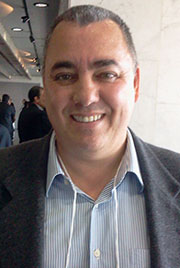
"If a sales coordinator for Animal Health is invited for a soccer match, it is good to have football boots and a uniform in the car"
With 15 years of experience in the Healthcare segment, 8 in the Animal Health and 7 between the Animal and Human Health segments, José Otávio Souza leads the IT board of directors for Latin America in Animal Health at Merck Sharp & Dohme, responsible for countries like Brazil, Mexico and Colombia, for instance. Previously, he was the IT director of Human and Animal Health in Brazil.
During an interview to Top Team, the executive, who has already worked in companies like RMB and PepsiCo, has recently participated in the National Forum of Market Intelligence Ibramerc and states that several companies in the Human Health segment also keep an eye on Animal Health and highlights: "The executive must understand this movement, study and get ready to act on it efficiently".
Follow the main parts of the interview:
What is the main trend in both Animal and Human Health segments?
Several industries that used to focus on Human Health have also bet on Animal Health segment. I see that this is a growing movement, even when some examples show the opposite. These two industries are closely related. As they deal with our well-being, one directly through Human Health products and the other one indirectly through Animal Health products, it is natural that a company acts in both segments, in search of their synergy.
How should the executive get ready to act in this scenario?
The executive must understand this movement, study and be ready to act on it efficiently. It is necessary to understand well the differences between Human Health and Animal Health segments, search where you can share services and intelligence and where you should keep the required specialties in each business.
And what are the main differences?
In the Human Health segment, we have a strong presence of audits, already consolidated. They let us know valuable data and enable detailed planning and facilitate route corrections, besides helping in processes. Within the Animal Health segment, such audits are not present, as they require a lot of creativity when searching for information. And the demand is huge!
So, how do you gather information?
There are several sources that help compose rich and useful information for the company, starting from their own internal data from ERPs; I even searched on the internet dozens of sites that somehow act in this area, passing through scientific research and also in the effective cooperation of their own collaborators who constantly bring information to the company. The various events where we will be present are also endless source of information. It is worth remembering that social networks are widely used by the company, enabling information sharing and cooperation.
To wrap up, how is the Animal Health sales force trained?
Differently from Human Health, in which the sales force is highly exposed to physicians and pharmacists, in the Animal Health segment, the sales force needs much more time to interact with several kinds of customers. Here we can see a closer relationship, which demands business flexibility and general understanding. If a sales coordinator for Animal Health is invited for a soccer match, it is good to have football boots and a uniform in the car (laughter).
|


 Print this page
 Mail this page