|
Interview
“Today is possible to sequence a genome within just a few days”
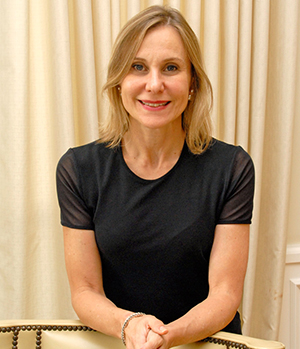 Majored in Medicine, Valéria Ede was the Commercial Director of Oncology at Roche from 2001 to 2008, in charge of this department in Brazil and the launch of medicines like Herceptin, Mabthera, Avastin, Xeloda and Tarceva. From 2008 on, she has been responsible for the Foundation Medicine in Brazil and founded an Oncology consulting business.
Foundation Medicine is a public American company which develops, manufactures and sells genomic analysis diagnostics for solid and circulating cancers. The company's tests are based on next-generation sequencing technology. Foundation Medicine is leading a transformation in cancer care, where each patient’s treatment is informed by a deep understanding of the molecular changes that contribute to their disease. “These molecular changes occur due to the DNA sequencing, by altering the function of the cell that starts to proliferate abnormally”, explains Valéria Ede.
During an exclusive interview to Top Team, Dr. Valeria Ede talks about Precision Medicine and comments about the challenges and the future of Medicine. Follow the main parts of the interview.
Top Team: What does Precision Medicine mean?
Dr. Valéria Ede: Precision Medicine e is a term that has evolved along the time and it used to be known as Personalized Medicine. When it comes to Oncology, there has been some evidence that each tumor is unique. That is, there is no similar tumor even if they belong to the same tissue. It is necessary to recognize the genes this tumor express, identify the right treatment for each person, the right moment, therefore, to search for the uniqueness of the disease in order to find the best kind of treatment.
Top Team: What does Molecular Information mean?
Dr. Valéria Ede: Carcinogenesis is the process by which normal cells are transformed into cancer cells. It is characterized by a progression of changes at the cellular, genetic and epigenetic level that ultimately reprogram a cell to undergo uncontrolled cell division, thus forming a malignant mass. The identification and mapping of these changes through DNA sequencing technology provides the molecular information. The introduction of new technologies for the sequencing and analysis of the DNA on large scale (next generation sequencing – NGS) enabled a new phase in the mapping of genetic alterations when compared to Sanger traditional methods of sequencing, together with a reduction of costs. One decade ago, the Human Genome Project took 13 years and 3 billion dollars to sequence the first human genome by using the Sange method. Today with NGS, it is possible to sequence a human genome for about 5 thousand dollars within a few days.
Top Team: What are the benefits of the Precision Medicine?
Dr. Valéria Ede: Several NGS Technologies have been developed and resulted in relevant progress in diverse segments. One of them is Oncology, with the sequencing of the DNA and RNA of tumors. Such technology has been used in studies to identify new genomic profile of several tumors. The understanding of the action of these alterations enables the development of new therapies that have strongly changed the treatment of patients with cancer. Today, sequencing tests identify the mutations and their corresponding therapies. It is also used to identify mutations related to hereditary cancer.
Top Team: What are the challenges faced by Precision Medicine?
Dr. Valéria Ede: It is a change of paradigm. The treatment of cancer is based on histology of tumors (kind of tissue, breast, lung, etc.). This therapeutic approach is based on the uniformity of treatments. In a near future, the treatment will be based on the kind of via activated regardless of histology. Other challenges lie on the patient´s driving with two or more relevant mutations or drivers, where we can briefly see the use of two or more concomitant therapies. The cost of treatment is also an important element, however, there are advantages in the cost-benefit that also need to be taken into account.
Top Team: To wrap up. In the future, how will medicine advance?
Dr. Valéria Ede: The biggest challenge lies in the development of new drugs and clinical studies, to prove the importance of identified alterations so that the Precision Medicine promising situation comes true. It is said that new therapies will be incorporated to the therapies to fight almost all kinds of cancer within the next five years.
|


 Print this page
 Mail this page