|
Interview
“The advancement of the United Kingdom and other developed countries is notorious when compared to Brazil”
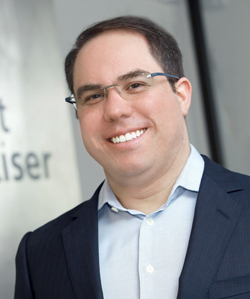 Rodrigo Moura has already worked at Procter & Gamble, Sony Ericson Mobile and OPAS/OMS. At the moment he works at Reckitt Benckiser as the Global Trade Marketing Director.
Straight from London, where he lives, the executive was interviewed by Top Team. He commented about the challenges of implementing global strategies and about the RB position as a Health Care company.
Follow the main parts of the interview:
Is it possible to globally implement the same successful strategies and procedures that have been locally executed?
The economic scenario and the market widely vary from country to country. Challenges and focus are different in developed countries when compared to under development ones. Consumers also tend to have diverse consuming habits, what ends up challenging multinationals with global brand strategies. However, we may find similarities among the strategies used to overcome major challenges.
Which were the main difficulties when implementing a global and standardized strategy?
One of the main tasks of the global coordination is to “connect the dots” by offering the best solutions for ordinary challenges. Global brands also find different levels of settlement and the product cycle may vary from country to country. Respecting the brand and finding the correct positioning for each country are the biggest challenges for companies. The positioning of more effective brands is based upon insights rather than upon local consumers. Local customs may change, the essence of the human being doesn´t though. Global companies tend to have flexibility in order to adapt global models of success for local realities.
How is the advancement of the RB global strategy as a Health Care business going?
The RB vision lies on a world where people are healthier and live better. Making people feel good is the core of our Health Care strategy. We have expanded investments in research and innovation, so that we keep ahead. In fact, RB is changing the “consumer health” system. We are already the seventh company in OTC with the highest rate of growth among the Top 10. We are already an HC global company and we have led the market in several countries.
What is the Brazilian market like within this context?
Brazil is a huge, complex and competitive market. However, it offers highly qualified professionals and a big amount of successful strategies that may be easily exported and adapted in other countries. Talking specifically about the pharmaceutical industry, Brazil looks like other major markets like China and India, for instance. Brazil RB has shown an amazing growth within Health Care categories and it will keep on steadily growing in the coming years.
To wrap up, did you find a very diverse scenario concerning innovation, technical support or professional recruitment in relation to Brazil?
Absolutely. The advancement of the United Kingdom and other developed countries is notorious when compared to Brazil. Product innovations tend to be shown earlier in those countries due to regulatory matters – which takes longer in Brazil – or because the Brazilian market is not ready for some innovations yet. In relation to recruitment, the difference is quite notorious as well. Professionals who take over global positions tend to come from developed countries, due to better education and better professional background; and the Brazilian professionals who take over these positions are also unique. Regarding technological support, market information and trade market strategies, Brazil lags behind, unfortunately.
|


 Print this page
 Mail this page