|
Interview
“Marketing professionals of the pharmaceutical industry tend to be even more creative”
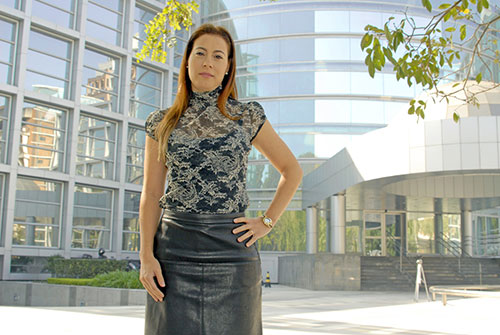
Andrea Mitelman has been on the market since 1997. At that time, she used to explain to customers what Internet was all about, why sites existed and how technological resources used to work. “From that moment on, the technological change has been so huge and fast that it is funny to think we used to have a CD in order to install the Internet, while now we can access the net while commuting through our smartphones”, says the executive.
Andrea worked at Sanofi-Aventis for over 14 years, is majored in Advertising and Publicity from FAAP, she holds a post-graduation degree in Business Administration and Marketing also from FAAP and a degree in Communication Management in Healthcare from USP. Since November 2014 she has been the Multichannel manager at Pfizer.
During an exclusive interview to Top Team, the executive talks about the evolution of the digital marketing, highlighted the impact of the Compliance department and anticipated a project that will soon be launched.
How has technology evolved over the last years? What are the main changes?
Not only society has evolved technically but also marketing has changed due to the new consumer profile, who makes use of the internet for almost everything: either to compare prices of products in stores or to search for medical information before having the appointment. We must be where our customers are, so, we need to balance both online and offline medias. By following Philip Kotler´s idea, it is perfectly possible connect both: the traditional media that must be used so that everyone gets to know their brand or product, and the digital one that can be used to create the individual commitment.
How can we make the Compliance Department keep up with all that evolution?
Today we can find a lot of information on the net, but most part is not reliable or not written by experts, especially in the healthcare area. On the other hand, regulation for pharmaceuticals is highly restrictive. This is not different for actions concerning digital environment. Thus, this segment, marked by quick technological evolution, also needs to follow some restrictive rules. And the Compliance department responsibility is to guarantee that some employees do the right things on the right way. As a consequence, in my opinion, the marketing professionals of the pharmaceutical industries tend to be even more creative than the ones from the other areas because they are supposed to create remarkable campaigns, once the amount of limitations is too big.
What are the goals and differentials of the “Distance Detailing” Pro program?
In such a vast country like Brazil, it is hard to reach all the places equally. Therefore, as a pilot initiative, we created an operation to distance detailing for physicians of remote places. That is a complete service carried out by healthcare professionals, who contact by telephone some physicians who work in these areas. Besides promoting Pfizer products, they offer ongoing medical content to aggregate value to these professionals daily routine. Although it is a pilot project, we have been able to measure these results and the satisfaction level of the physicians contacted.
When will Pfizer PRO portal be launched?
This semester we will launch the Pfizer PRO portal, a platform used all over the world for the company to enable the ongoing education of physicians and other healthcare professionals like nurses, pharmacists and dentists. After filling in a form, the healthcare professional will be able to access over two thousand medical books for free, two thousand journals of the Medline Complete, 130 magazines of healthcare management and over 20 thousand images, videos and animations for download. They can also watch national and international events online.
To wrap up, what are the new trends for the digital marketing?
Technology has changed at an amazing speed and a lot is still to come. Nowadays, physicians already talk to their patients via Whatsapp. In the future, I believe appointments through telepresence, holography or virtual reality, for instance, will become reality. There is also a tendency to use applications and wearable devices like bracelets and glasses. They might improve the quality of life and also increase the control of chronic disease.
Videos are another powerful tool that has helped inform the patients who feel even more motivated to care for their health and to adhere to the treatment.
|

 Print this page
 Mail this page