|
It is very hard to be innovative within this situation
 The Association of National Pharmaceutical Laboratories (Alanac) was set up over twenty years ago in order to defend the Brazilian pharmaceutical and drug manufacturers like EMS, Eurofarma, Zodiac and União Química. The Association of National Pharmaceutical Laboratories (Alanac) was set up over twenty years ago in order to defend the Brazilian pharmaceutical and drug manufacturers like EMS, Eurofarma, Zodiac and União Química.
Among other actions, the entity stands out for trying to avoid that foreign lobbies become able to determine trade policy in the National Intellectual Property Institute. “Alanac and other entities have tried several times to show that if the project is approved just like the Brazilian government wishes it will be harmful for the national industry interests”, says Carlos Geyer, president and director of the entity, during an exclusive interview to Top Team. He also criticizes Anvisa and adds that the fractioned medicines are useless. Read the interview below:
Top Team: How do you evaluate the Brazilian industries market share? Has it increased due to generics?
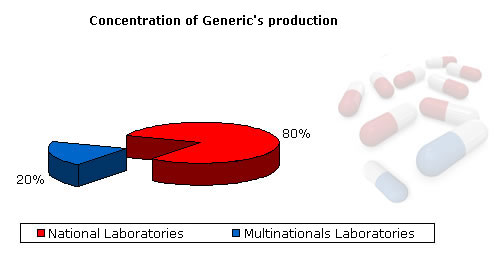
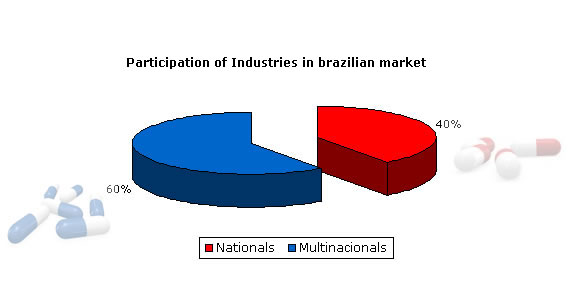
Carlos Geyer: The Brazilian industries market share has grown over the last years and they have already reached over 40% in 2006. Certainly, the increment in the generic production has contributed to that. It is expected that the generics market share reach 11%. That is due to the fact that 80% of generics production is provided by national laboratories.
Top Team: Are the Brazilian industries ready to face lthe largest multinational companies competition?
Carlos Geyer: If there are clear, fair and appropriate rules for economic and sanitary regulations the largest national laboratories do not lose competition when compared to several transnational industries. However, medicine and pharmaceutical products must keep their Industrial, Technological and Foreign Trade Policy – PITCE - priorities by applying effective and efficient tools already developed, such as the profarma program by BNDES, for instance. The small and medium industries still require a lot of attention, mainly those ones with great technological power.
Source: Alanac
Top Team: For many years Alanac has tried to refrain foreign lobbies from determining trade policy in the National Intellectual Property Institute(INPI). Which actions were taken?
Carlos Geyer: Alanac has really struggled to avoid the implementation of intellectual property legislation for medicines and pharmaceutical products that do not meet the national industries interests due to the way it was implemented. Brazil has provided more than expected concerning the concessions that Trips agreement established. We were maybe the only country in the world that accepted in 1996 the so called Trip plus and also Pipeline. We haven´t enjoyed it though due to the transnstional industry pressure, especially the American industry and government. Alanac and other entities like Abifina have tried several times to show that if the project is approved just like the Brazilian government wishes it will be harmful for the national industry interests. Unfortunately, commercial and non-strategic interests prevailed. Nowadays our society has started to be aware of the problem.
Top Team: How can national industries gain market share?
Carlos Geyer: Mainly through implementing innovations concerning similar medicines for they are the only ones likely to be innovated. However, Anvisa must understand the strategic importance of this kind of innovation and therefore contribute to its development process in partnership with CMED.
Top Team: Is the laboratories and largest multinational companies takeover harmful for the Brazilian industry? Why? In what aspects?
Carlos Geyer: The concentration of the pharmaceutical industry either through takeovers or acquisitions is a worldwide trend. It won’t be different in Brazil.
Top Team: Which are the Brazilian industries main difficulties?
Carlos Geyer: One of the main difficulties concerns Anvisa and CMED attitudes led by the lack of target criteria and deadlines. Besides, new rules and regulations also go against the current legislation. It is very hard to be innovative within this situation mainly for the small and medium pharmaceutical industries which generally own little capital.
Source: Alanac
Top Team: In your opinion, are the Brazilian industries ready to acquire the fractionated medicines?
Carlos Geyer: Small and medium industries will face real financial problems to implement the fractionated line in case it becomes mandatory. In our opinion the fractionated medicine does not need to be mandatory. Undoubtedfully, the society as a whole is well-intentioned but misguided about the benefits of the fractionated medicines.
Top Team: To wrap up, what do you expect for 2008? Will the national industries market share increase?
Carlos Geyer: Some trends lead us to believe that the increase of the national industry market share will continue. It depends on how Brazilian industries will face the difficulties we mentioned before.
|
|


 Print this page
 Send this page