|
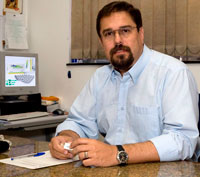
The Industrial manager of Almeida Prado Homeopathic Laboratory and researcher at the National Counsel of Technological and Scientific Development, Ezequiel Paulo Viriato.
Majored in Pharmaceutical Science from Universidade de São Paulo, Masters in Homeopathy from Faculdade de Ciências da Saúde de São Paulo (IBEHE - Faculty of Health Sciences of the Brazilian Institute of Studies in Homeopathy), specialization in Homeopathy from FACIS-SP, and in Magistral Pharmacy from ANFARMAG, among other activities. He works as a member of the Thematic Technical Committee on the Brazilian Homeopathic Pharmacopoeia, as a researcher in the National Counsel of Technological and Scientific Development (CNPQ) and as the industrial manager of Almeida Prado Homeopathic Laboratory. In this issue he tells us about the concept of integrative medicine.
Concept of integrative medicine
Integrative Medicine is a concept developed by two authors, Ress and Weil. The first one, a professor at the Royal College of Physicians in London, UK, and the second one, the founder of a program for a medical course at the College of Medicine in Arizona, suggested a trans-discipline work that would be able to effectively integrate the diverse therapeutic practices aiming at finding a cure for diseases. Such model was named integrative/integrated in order to find another concept and meaning for medical practices, previously considered complementary like physiotherapy, nutrition, psychotherapy, phytotherapy and also, homeopathy.
The doctor-patient-health relation
The integrative medicine was surprisingly mentioned in the American Academy of Sciences report, published in 2005. Such community of scientists of highly industrialized society under noticeable biotechnological development, decided to release their assessment, as there are statiscally more reason to be taken into account, like offering an important benefit in the doctor-patient-health relation. The Integrative Medicine offers better support and care concerning clinical complaints, which used to be considered only modern society "waste". They have focused on the cure and on the care, highlighting positive approach and solidarity to patients. They have become, thus, authentic medicine based on statements and evidences, considering the mankind, his singularity and integrality for the medical practice. From this point of view, the integrative mentality is far from being a practice that highlights the sectarism or fight against modern medicine; on the contrary, it enables the life of the prescriber and the benefit for the patient's health.
The implementation itself
The integrative medicine defends the mankind independently on the therapeutic treatment that each physician or healthcare professional adopts. The panel introduced by the President of Brazil, called "National Policy on Integrative and Complementary Practices in the Brazilian Health System", signed and published in the Diário Oficial Nº 971 on May 3, 2006, Ministry of Health, must be implemented with the support of the society and Scientific Institutions, which elaborated the project. Patients can no longer wait to use and physicians must know how to implement medical practice into their routine. At the end, every physician who lives the good clinical practice knows how to prioritize the best for their patient, what is within the third principle: "when neither the contrary nor the similar ones are able to cure, healing is what really matters".
About the medicine for the treatment of dengue
Aproved by Anvisa at the end of 2008, a new homeopathic treatment recommended for the treatment of dengue is already on the market, showing that Homeopathy provides important contributions and benefits to society. Such medicine is called Proden®, a homeopathic medicine produced and traded by Almeida Prado Laboratory, which helps reduces the effects and accelerates the cure of symptoms of dengue, general weakness, tiredness, headache, prostration, muscle pains, nausea, fever, rash, joint pains, muscle aches and retro-orbital pain. It is worth highlighting that the studies carried out by the physician and researcher dr. Renan Marino, in the city of São José do Rio Preto, in 2007, showed that the medicine also helps with prevention, in association with actions against the mosquitoes, it lowers the contamination rate to 73% of the cases and diminishes the recovery time besides treating symptoms, including severe hemorrhage.
|
|


 Print this page
 Mail this page